

If you drive in South Bend, Indiana, you’ve probably seen it: the TPMS light (tire pressure monitoring system warning) comes on seemingly out of nowhere, especially when the weather changes. The good news? In many cases, it’s not a major problem. But it is a warning you shouldn’t ignore, because incorrect tire pressure affects safety, tire wear, fuel economy, and handling.
Here’s why your TPMS light turns on so often in Indiana weather, what it could mean, and what to do next.
What Is TPMS (Tire Pressure Monitoring System)?
TPMS is a safety system that monitors your tire pressure and alerts you when one or more tires are significantly underinflated. Most vehicles trigger the light when pressure drops about 25% below the recommended level (exact threshold varies by vehicle).
Why Indiana Weather Triggers the TPMS Light
- Cold Temperatures Lower Tire Pressure When temperatures drop, the air inside your tires contracts. A common rule of thumb is: Tire pressure drops about 1 PSI for every 10°F decrease in temperature. So if South Bend goes from a mild afternoon to a cold overnight (or we get a sudden cold front), your tires can lose several PSI quickly, enough to trigger the TPMS light.
- Big Temperature Swings Are Common Here Indiana weather can shift fast, warm afternoons and cold nights in fall and spring are classic TPMS-light season. Your tires may be fine at 2 PM, then your TPMS light appears on your morning commute.
- Natural Slow Leaks Become More Noticeable A small leak from a nail, valve stem, or bead seal can be “masked” in warmer temps but show up more clearly in cold weather as pressure drops.
What the TPMS Light Is Telling You (Steady vs. Flashing)
TPMS Light Is Steady (Solid)
Most often, a solid TPMS light means one or more tires are low on air. This is the most common scenario during cold snaps.
TPMS Light Is Flashing (Then Stays On)
A flashing TPMS light typically indicates a TPMS system issue, such as:
- A failing TPMS sensor battery
- A sensor not communicating
- A sensor problem after tire service
- The vehicle needs a TPMS relearn/reset
If it flashes when you start the car, it’s a good idea to have the system checked.
What To Do When Your TPMS Light Comes On
Step 1: Check Tire Pressure (When Tires Are Cold)
Use a tire pressure gauge and compare your readings to the recommended PSI listed on the driver-side door jamb sticker (not the number on the tire sidewall).
Top off each tire to the correct PSI.
Pro tip: Don’t forget the spare if your vehicle has TPMS monitoring for it (some do).
Step 2: Drive a Few Minutes
After inflating, many vehicles will turn the TPMS light off after a short drive. Some may take longer.
Step 3: If the Light Stays On, Get It Inspected
If the TPMS light remains on after your pressure is correct, you may have:
- A slow leak (nail/screw)
- A leaking valve stem
- A bead leak around the wheel
- A TPMS sensor issue or system fault
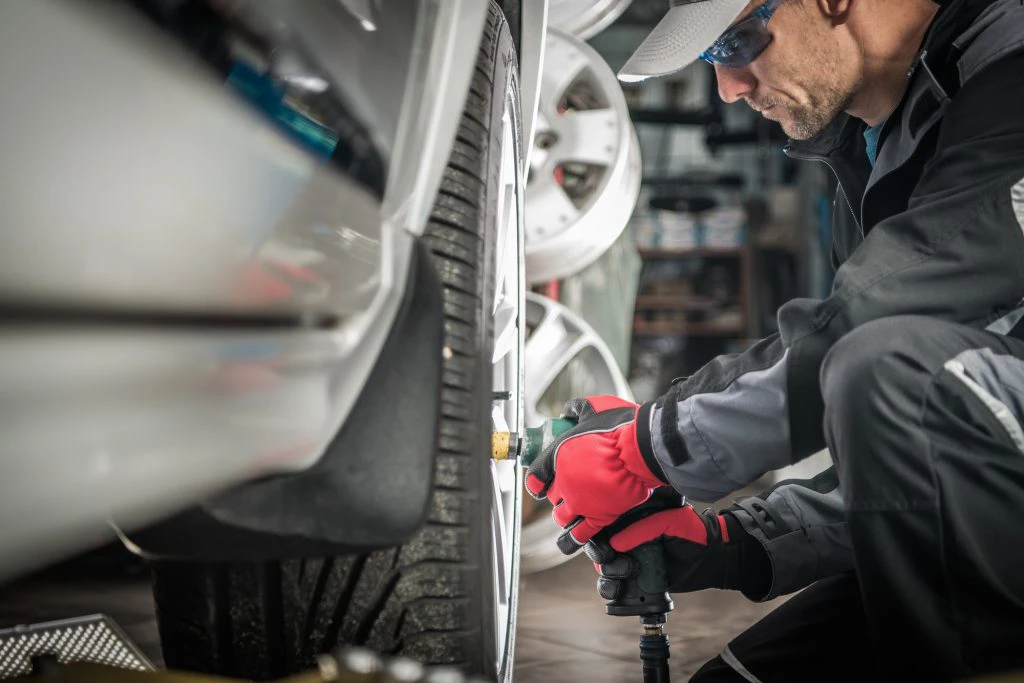
At Coast to Coast Tires & Auto Care in South Bend, IN, we can inspect the tire, confirm pressure readings, and diagnose the TPMS system.Common TPMS Problems We See in South Bend
Low Tire Pressure From Seasonal Temperature Drops
Very common in late fall and winter.
TPMS Sensor Battery Failure
TPMS sensor batteries typically last several years. When they weaken, the system may trigger warning lights, often intermittently at first.
TPMS Issues After Tire Replacement or Rotation
Some vehicles require a TPMS relearn/reset after tire rotations or wheel changes.
Slow Leaks From Nails, Valve Stems, or Wheel Beads
Indiana roads (construction zones, winter debris) can increase puncture risk.
Why You Shouldn’t Ignore the TPMS Light
Driving with low pressure can lead to:
- Faster, uneven tire wear
- Reduced traction (especially in rain or snow)
- Longer stopping distances
- Poor handling
- Increased risk of tire damage or failure
- Lower fuel economy
TPMS Tips for Indiana Weather
- Check tire pressure monthly (more often during cold snaps)
- Inflate tires when they’re cold for the most accurate reading
- Keep a small air compressor in your vehicle during winter
- If one tire repeatedly loses air, get it checked for a slow leak
- After tire work, ask if your vehicle needs a TPMS reset/relearn
Need TPMS Repair in South Bend, IN?
If your TPMS light is on, or keeps coming back, visit Coast to Coast Tires & Auto Care for reliable TPMS repair services in South Bend, Indiana. We can help with:
- TPMS sensor inspection
- TPMS reset/relearn
- TPMS valve replacement
- Tire pressure checks and slow leak diagnosis
Call us or schedule an appointment today and we’ll help you get back to safe, worry-free driving.


